


01
Initial Assessment & Treatment
Your initial appointment will include a health history intake, a thorough examination to establish an appropriate treatment plan specific to you, and your first treatment. More often than not, more of the body than the primary concern is involved. The entire body is taken into consideration during your assessment.
Some treatments require a visual or movement assessment therefore we ask that you wear comfortable clothing. If you are receiving Kinesiology or Fascial Stretch Therapy, you may want to bring a t-shirt and shorts.
02
Kinesiology/ Kin Therapy
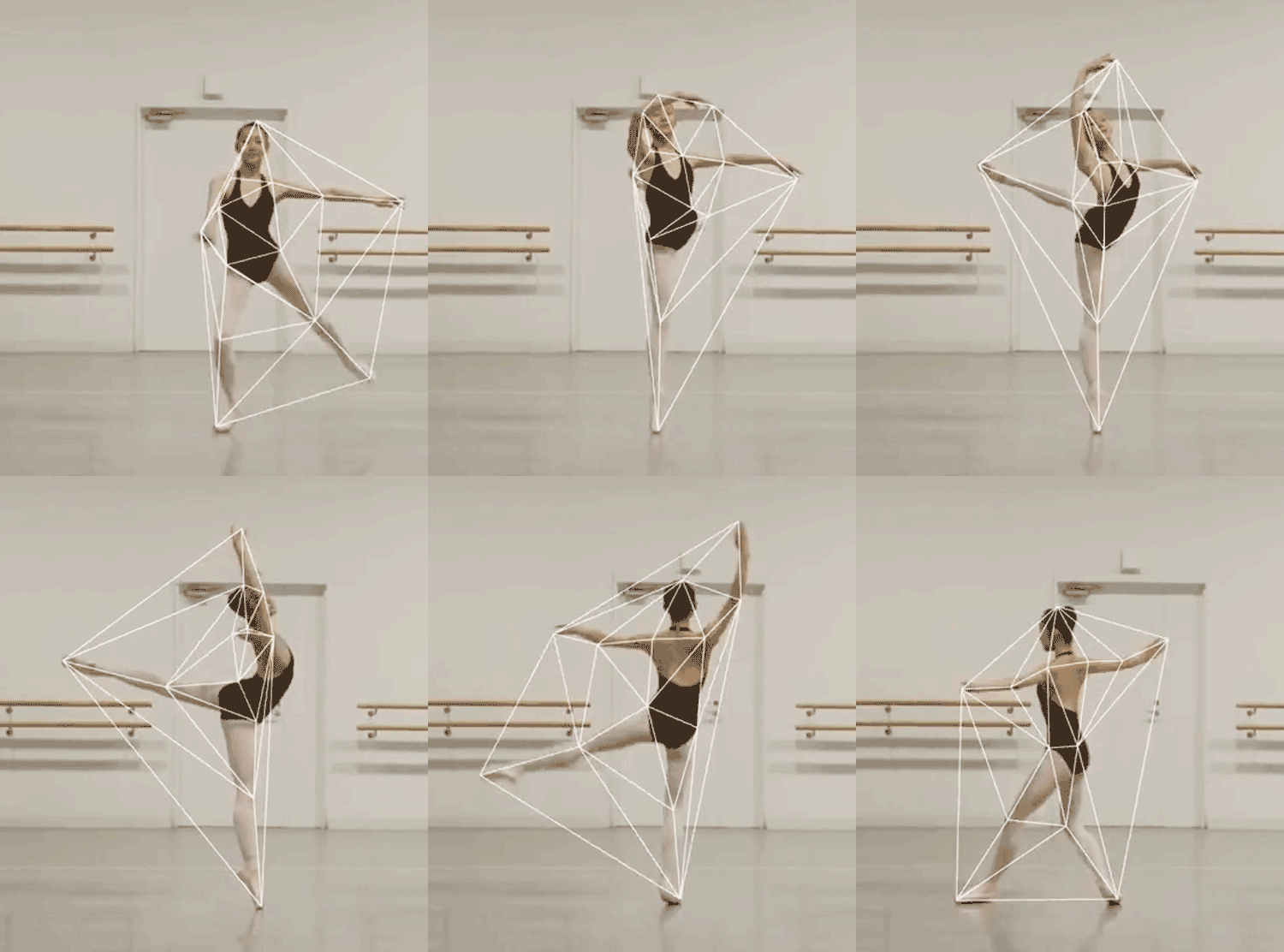
Kinesiology is the study of movement. More precisely it is understanding and measuring the kinetic chain of motion. Through movement analysis muscles and tissues that are not functioning properly will be highlighted.
The kinesiologist will create a plan with specific movements, positions, and exercises that will start to mend the broken links in the kinetic chain.
Depending on the level of pain, injury or dysfunction follow-up appointments will be made to reach optimum function and pain-free mobility.

Fascial Stretch Therapy (FST)
Fascial Stretch Therapy (FST) is a pain-free, table-based, assisted stretching method. FST opens space in the joint capsules using gentle traction, then elongates the muscles and fascia to provide better mobility, stability and joint health. It is a science-based system of dynamic movement-based stretching.
Every session is an individualized assessment of function and mobility to achieve positive outcomes in client function. FST is for people of all ages and fitness abilities looking to improve their quality of movement.

03
Manual & Massage Therapy
Manual therapy, or massage therapy, is a therapeutic treatment using soft tissue manipulation, joint mobilizations, and myofascial release. Massage treatments can be extremely beneficial for acute and chronic pain and conditions. Having a direct impact on muscle tone, length, spasm, and adhesions, massage is an excellent tool to interrupt the pain cycle and introduce new sensory input.
Each session is spent decreasing muscle tension and fascial restrictions in order to improve your range of motion. By increasing your range of motion and circulation, pain and dysfunction can be significantly reduced.